

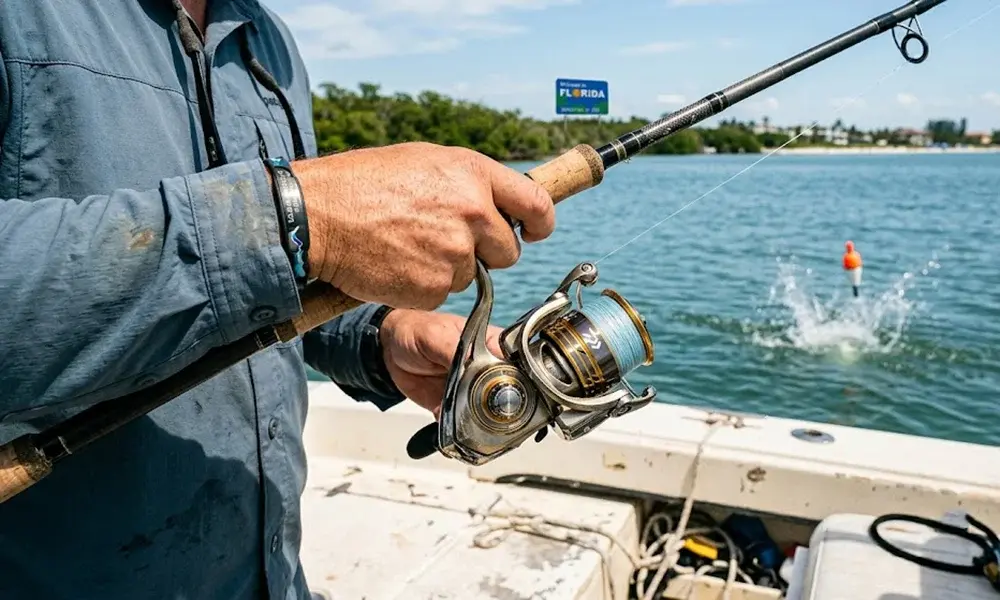
There is no single best rig for inshore fishing in Cedar Key, but the popping cork is the best all-around choice for grass flats, the jig head is the best for covering water with artificial lures, and the Carolina rig is the best for fishing bottom in current. Match the rig to the water depth, the structure, the tide, and the fish you are targeting, and keep your setup simple.
Below, you will find how each rig works, when to use it, what tackle to pair it with, and how to choose in the field. If you can tie a few basic knots, you can fish every rig in this guide.
How Do You Choose the Right Inshore Rig?
Before you tie anything on, ask four questions.
- What am I targeting? Speckled trout, redfish, sheepshead, and black drum each feed differently, so their best rigs differ.
- How deep is the water? Shallow grass flats call for suspended or lightly weighted baits. Deeper channels call for weight.
- What is the bottom like? Thick seagrass, oyster shell, and open sand all change what you can pull through without snagging.
- How fast is the tide moving? Strong current needs more weight to keep bait in the strike zone, while slack water lets you fish lighter.
Cedar Key’s Big Bend coastline is full of shallow seagrass, oyster bars, and tidal creeks, so a handful of rigs covers almost everything. For a species overview, see our guide to Cedar Key’s top inshore catches.
The Popping Cork Rig
What It Is
A popping cork is a float with a concave top. A leader runs below it to a hook baited with live shrimp or a soft plastic. When you snap the rod tip, the cork pops and clicks on the surface, which sounds like feeding fish and attracts predators.
How to Rig It
Slide the cork onto your mainline, then tie on a swivel or a leader. Use a leader of roughly two to three feet, with a hook tied to the end. Adjust the leader length so the bait rides just above the grass tops. Many popping corks have a weighted body or a small sinker below it to help it cast and track.
When to Use It
This is the go-to rig for speckled trout over seagrass. It also catches redfish cruising shallow flats and small gamefish around creek mouths. Fish it in water from a foot or two up to about four or five feet deep. Pop the cork, pause for several seconds, and watch for the cork to disappear. Many bites come during the pause.
Pros and Cons
The popping cork is easy for beginners, it keeps bait out of the grass, and it gives you a clear visual bite indicator. It is less effective in strong wind and heavy chop, and it is a poor choice when fish are feeding on the bottom.
The Free-Lined Live Bait Rig
What It Is
This is the simplest rig there is: a hook, a leader, and a live shrimp or small baitfish with no weight and no float.
When to Use It
Free-lining shines when fish are spooky, the water is calm and clear, and the bait needs to behave naturally. It works well along oyster bars, shorelines, and shallow flats where a sinker or cork might spook fish. Cast beyond the target and let the bait drift into the strike zone with the current.
Pros and Cons
The presentation is as natural as it gets. The downside is limited casting distance and limited depth control, so it struggles in wind or fast current.
The Jig Head Rig
What It Is
A lead-headed hook, usually paired with a soft plastic body such as a paddle tail, shrimp imitation, or curl tail. The jig head provides both weight and a hook in one piece.
How to Rig It
Thread the soft plastic onto the hook so the body sits straight, with the hook point exiting the back. Choose a jig head weight that lets the lure reach the strike zone without dragging heavily through grass. Lighter heads, around an eighth of an ounce, suit shallow flats, while heavier heads handle deeper holes and current.
When to Use It
The jig head is ideal for covering a lot of water, searching for active fish, and fishing both grass edges and sand. It works for trout, redfish, and flounder. Retrieve it with a hop-and-pause motion, keeping the lure near the bottom without dragging constantly. For lure choices, see our guide to the best baits and lures for Cedar Key inshore fishing.
Pros and Cons
Jig heads are versatile, inexpensive, and easy to cast. They can snag in heavy grass or oysters, so a captain’s guidance on where to fish them helps.
The Carolina Rig
What It Is
A Carolina rig puts a weight above a swivel, with a leader and hook below. A sliding egg sinker sits on the mainline, a bead protects the knot, and a swivel stops the weight. The leader below the swivel, typically a foot and a half to two feet, carries the bait.
When to Use It
Use it when you need to get bait to the bottom and keep it there, such as in channels, deeper holes, and areas with moving current. The weight stays on the bottom while the bait floats naturally behind it. It is productive for redfish, black drum, and flounder, especially with cut bait or live shrimp.
Pros and Cons
It handles current and depth well, and it keeps the bait in the zone. It is less suited to shallow, grassy flats, where the weight can drag and foul in the grass.
The Knocker Rig
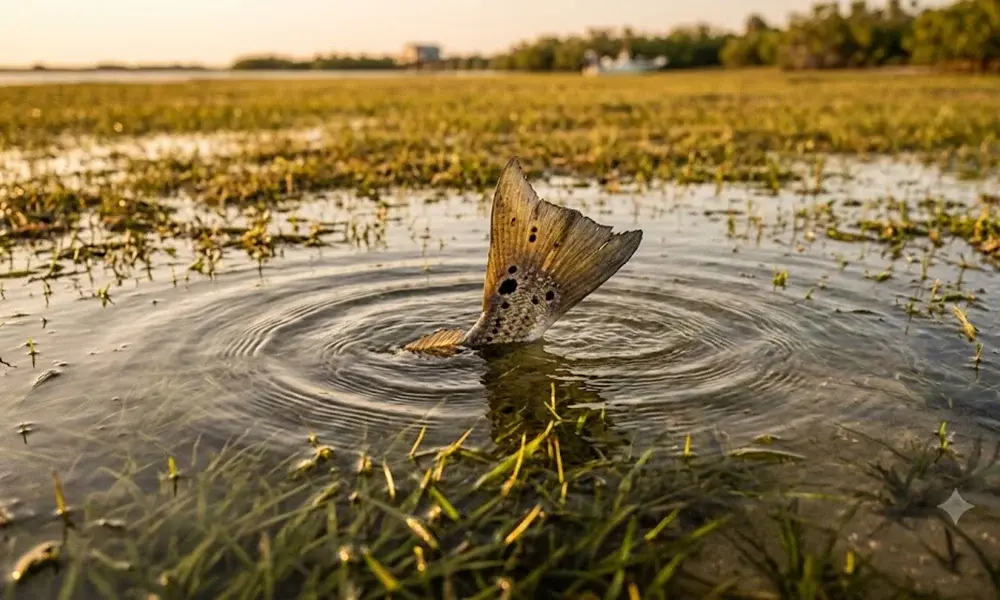
The knocker rig is a close cousin of the Carolina rig. The egg sinker slides directly down onto the hook, with no swivel and no long leader, so the bait stays tight to structure. It is the standard rig for sheepshead and other structure-oriented fish around oyster bars and pilings. Pair it with a fiddler crab or a small piece of shrimp and a small, strong hook. Our guide to oyster bar fishing in Cedar Key explains why that structure is so productive.
The Weedless Soft Plastic Rig
When the grass is thick and a standard jig head will foul, a weedless rig helps. Rig a soft plastic on a wide-gap worm hook with the point tucked back into the plastic, and add a small bullet weight if needed. The lure slides through grass without picking up weeds, which is useful for redfish and trout hiding in heavy cover.
Which Rig Works Best for Which Fish?
- Speckled trout: Popping cork with live shrimp, jig head with soft plastic, or free-lined shrimp.
- Redfish: Free-lined or cork-fished shrimp, jig head with a paddle tail, Carolina rig with cut bait, or a weedless plastic in heavy grass. See our guide to sight-fishing for redfish on Cedar Key’s grass flats for sight-casting tactics.
- Sheepshead: Knocker rig with a small hook and fiddler crab.
- Black drum: Carolina rig or knocker rig with shrimp or crab near oyster bars and deeper holes.
- Flounder: Jig head with a soft plastic worked slowly along sandy edges and passes.
What Tackle Should You Pair with These Rigs?
A versatile, inexpensive setup handles all of these rigs.
- Rod: A medium or medium-light spinning rod in roughly the seven-foot range, with a fast action for casting light baits and setting hooks.
- Reel: A spinning reel in the 2500 to 3000 size class with a smooth drag.
- Mainline: Braided line, commonly in the 10 to 20 pound class, for casting distance and sensitivity.
- Leader: Fluorocarbon, commonly in the 20- to 30 pound class, because it is hard to see and resists abrasion from oyster shells.
- Knots: An improved clinch knot or Uni knot works for hooks and lures, and a double Uni or similar line-to-line knot joins braid to leader.
Those sizes are common starting points, not strict rules, so adjust to the conditions. If you are curious about fly gear, our comparison of fly fishing versus spinning tackle in Cedar Key walks through the differences.
Circle Hooks or J-Hooks?
When you fish live or natural bait, a circle hook can be a smart choice. The Florida Fish and Wildlife Conservation Commission recommends non-offset circle hooks for natural bait because they tend to catch the jaw, which reduces gut-hooking and makes release easier. Its fish handling guidance also notes that you should not set a circle hook with a hard jerk. Instead, let the fish load the rod and reel steadily.
J-hooks still have a place, especially with artificial lures and when you want a quick hook set on fish with soft mouths like trout. Whichever you choose, keep hooks sharp, and consider crimping the barb for easier, safer release.
How Do Tide and Wind Change Your Rig Choice?
- Strong current: Add weight or switch to a Carolina rig so bait stays in the strike zone.
- Slack tide: Go lighter with a free-lined bait or a lightly weighted cork rig.
- Wind and chop: A popping cork becomes harder to read, so a jig head or a Carolina rig often performs better.
- Clear, calm water: Use lighter leader and more natural presentations.
You can check tides ahead of time on NOAA Tides & Currents, and our beginner’s guide to how tides affect fishing in Cedar Key shows how to read them.
Common Rigging Mistakes
- Using too much weight. Heavy sinkers spook fish and kill natural presentation.
- Leaving the leader too short or too long. Adjust the cork leader so the bait rides just over the grass.
- Skipping knot checks. Abrasion from oysters weakens line, so retie often.
- Using oversized hooks. Many inshore fish have small mouths, so match the hook to the bait and target.
- Using the wrong rig for the bottom. Carolina rigs foul in thick grass, and jig heads snag in shell.
What Are the Rules You Need to Know?
Florida requires most anglers to have a saltwater fishing license, and you can purchase one through Go Outdoors Florida. Size limits, bag limits, and gear rules vary by species and can change, so check the official FWC saltwater recreational regulations before you fish.
With a Saltwater Outlaw charter, licenses, bait, tackle, water, and cooler space are included, and your captain handles the rigging.
Why Let a Guide Handle the Rigging?
Choosing the right rig is easier when someone else already knows the water. A captain reads the tide and the bottom, picks the rig and bait that match the conditions, rigs it correctly, and changes it when the bite changes. You spend your time fishing and learning instead of fiddling with knots. If you are choosing a trip length, our comparison of half day, 3/4 day, and full-day charters can help, and our first-time charter guide explains what to expect.
Frequently Asked Questions
What is the best all-around rig for inshore fishing?
For Cedar Key’s grass flats, a popping cork with live shrimp is the best all-around rig. For covering water with artificial lures, a jig head with a soft plastic is the most versatile.
What is the difference between a Carolina rig and a knocker rig?
A Carolina rig uses a swivel and a longer leader, so the bait floats behind the weight. A knocker rig slides the sinker directly onto the hook, which keeps the bait tight to structure.
How long should the leader be on a popping cork rig?
A leader of roughly two to three feet is a common starting point. Adjust it so the bait rides just above the top of the grass.
What size hook should I use for inshore fishing?
It depends on the bait and the fish. Use a small, strong hook for sheepshead and small baits, and a larger, wider-gap hook for bigger live baits and redfish. When in doubt, match the hook to the size of the bait.
Do I need to bring my own rigs on a charter?
No. On a guided trip, your captain supplies and rigs the tackle. Learning the rigs in this guide simply helps you understand what your captain is doing and why.
Ready to Put These Rigs to Work?
The best inshore rig is the one that fits the water you are fishing. Start with a popping cork on the grass, switch to a jig head to cover water, go to a Carolina or knocker rig for bottom structure, and adjust as the tide and wind change.
Saltwater Outlaw runs private inshore trips for families, friends, beginners, and experienced anglers, with bait, tackle, licenses, water, and cooler space included. Book your Cedar Key fishing charter or call 352-843-4067 to plan your trip.
