

One of the most common questions Captain Tracy hears before a trip is some version of: “What are we going to use to catch fish out there?” It’s a good question, because Cedar Key’s mix of grass flats, oyster bars, and tidal creeks rewards a slightly different approach than open-water or deep-sea fishing.
The good news is that everything is provided on a charter trip, bait, tackle, and rods are all included. But understanding what’s actually being used, and why, makes the whole day more interesting (and helps if you ever want to fish these waters on your own).
Live Bait: The Local Favorite
For most inshore species in Cedar Key, live bait remains the most consistently effective option, and it’s not hard to see why; it looks, smells, and moves like real food, because it is.
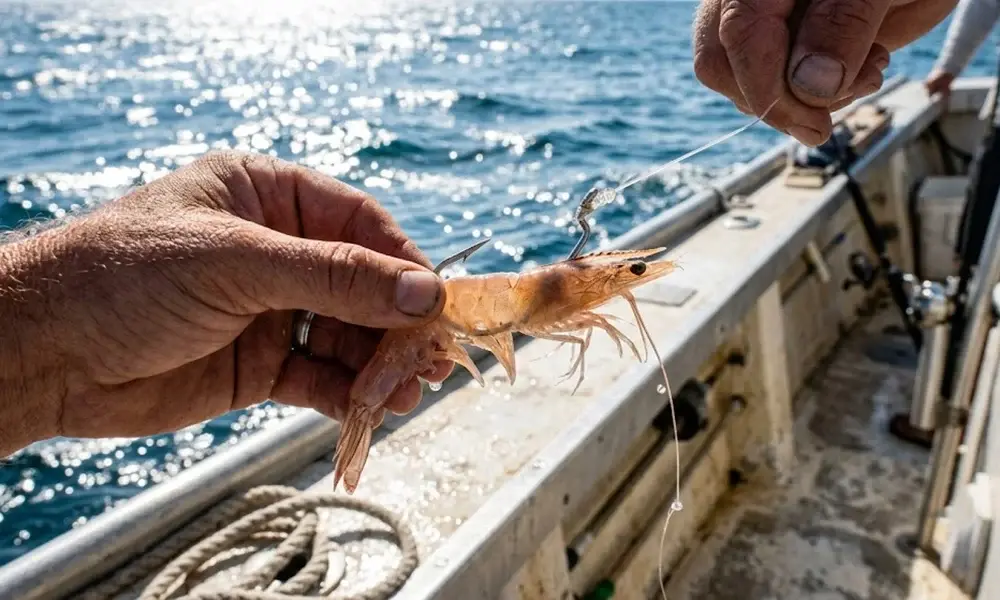
Live shrimp is the single most versatile bait in Cedar Key’s waters. Redfish, trout, sheepshead, black drum, and flounder will all eat a live shrimp, making it the default choice when targeting a mix of species rather than one specific fish. It’s typically fished on a simple hook and split-shot rig to get it down to the bottom or under a popping cork when working grass flats.
Live mullet and pinfish are favored for larger predators like bigger redfish, snook, and cobia. Their size and movement pattern trigger more aggressive strikes from fish looking for a substantial meal rather than a quick snack.
Live crabs are especially effective for cobia and larger redfish and are considered one of the top baits during cobia’s spring migration through the Big Bend.
The Popping Cork Setup
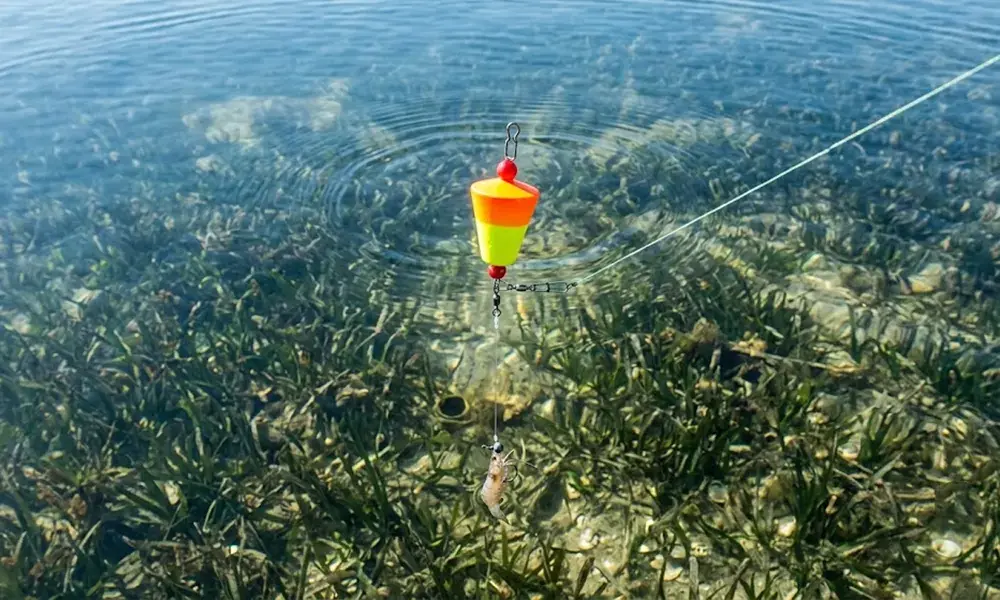
If there’s one rig that defines Cedar Key inshore fishing, it’s live shrimp fished under a popping cork. Here’s how it works: a cork sits on the surface with the shrimp suspended a foot or two below it. A sharp twitch of the rod tip makes the cork “pop,” creating a splashing, gurgling sound that mimics feeding fish or fleeing baitfish, which draws predators in from a distance to investigate and then find the shrimp waiting below.
This technique is especially effective on grass flats where fish are cruising over broad areas at various depths, since the noise helps call fish in that might not have found the bait otherwise.
Artificial Lures: When and Why They Work
Live bait isn’t always necessary, and many experienced anglers actually prefer artificial lures for the control and versatility they offer.
Soft plastic jigs (paddletails and shrimp imitations) are a go-to for both redfish and trout. They can be worked slowly along the bottom to imitate a foraging shrimp or crab, and they hold up better than live bait for anglers who want to make repeated casts without rebaiting.
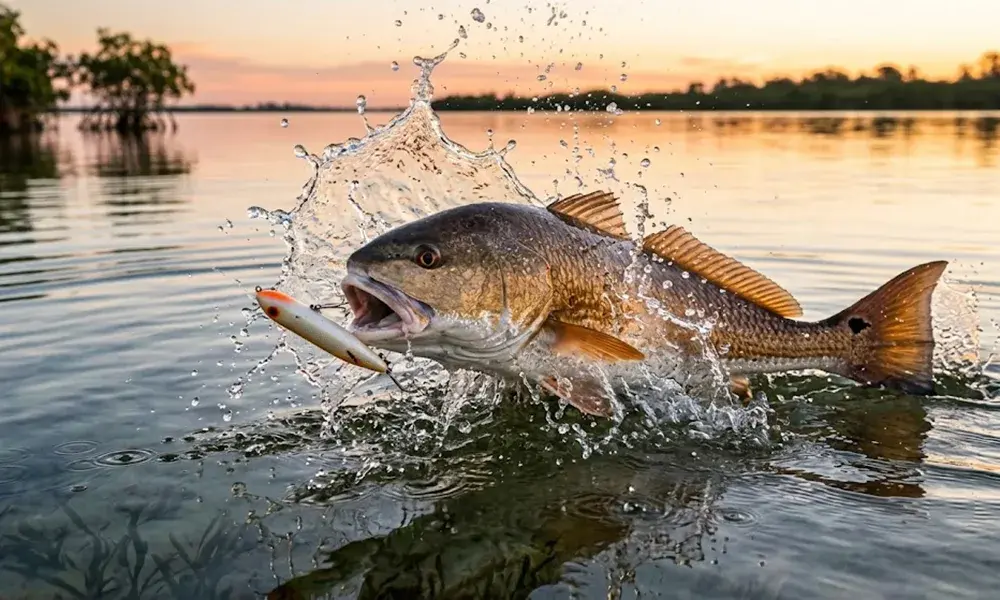
Topwater lures (poppers and walk-the-dog-style plugs) produce some of the most exciting strikes in inshore fishing, since the take happens right on the surface, often visible from a distance. These tend to work best during low-light periods, early morning or late evening, when fish are more aggressive and less cautious about striking near the surface.
Spoons are effective for covering water quickly and are particularly useful for species like Spanish mackerel and cobia, which respond well to a fast, flashing presentation.
Matching Bait to Species
| Species | Best Bait/Lure Options |
| Redfish | Live shrimp under popping cork, soft plastic paddletails, topwater plugs (low light) |
| Spotted Seatrout | Live shrimp, soft plastic jigs, topwater plugs (low light) |
| Sheepshead | Live shrimp or fiddler crabs, fished tight to structure |
| Black Drum | Live shrimp or crab, fished on bottom near oyster bars |
| Flounder | Live bait fish or shrimp, worked slowly along sandy bottom |
| Cobia | Live crabs or eels, large jigs, sight-cast when spotted cruising |
| Spanish Mackerel | Fast-moving spoons and jigs |
Why Bait Choice Changes With Conditions
Experienced captains don’t stick to one bait all day; they adjust based on water clarity, tide stage, and what the fish are actually responding to. On a clear, calm day, artificial lures might get plenty of looks. On a stained or choppy day, live bait’s scent trail often out-produces artificials, since fish are relying more on smell than sight to locate food.
This is part of why local experience matters so much here, knowing when to switch from a soft plastic to live shrimp, or from a popping cork to a straight bottom rig, based on how the day is unfolding, is a skill built over thousands of trips rather than something that can be planned in advance.
What’s Provided on a Saltwater Outlaw Charter
Every trip includes bait and tackle, so there’s no need to source or bring your own. Captain Tracy selects the right combination of live bait and lures based on the day’s tide, target species, and water conditions, adjusting throughout the trip as needed rather than sticking to a single approach regardless of what’s working.
Ready to Put These Baits to Work?
Understanding the bait is one thing; watching a local captain choose the right presentation in real time, based on decades of reading these waters, is another. Book a Cedar Key charter and see it in action.
Frequently Asked Questions
What is the best all-around bait for Cedar Key fishing?
Live shrimp is generally considered the most versatile bait in Cedar Key, since it’s effective for redfish, trout, sheepshead, black drum, and flounder alike.
Do artificial lures work as well as live bait in Cedar Key?
Yes, in the right conditions. Soft plastic jigs and topwater lures can be highly effective, particularly in clear water or during low-light hours, though live bait often has an edge in stained or rough water.
What is a popping cork used for?
A popping cork suspends bait (typically live shrimp) at a set depth and creates surface noise when twitched, which draws in predators like redfish and trout from a distance.
What bait is best for catching cobia in Cedar Key?
Live crabs and eels are top producers for cobia, particularly during their spring migration through Florida’s Big Bend region.
Do I need to bring my own bait and tackle for a charter?
No. Saltwater Outlaw provides all bait and tackle needed for your trip, with selections adjusted based on target species and current conditions.
Saltwater Outlaw Charters, Cedar Key, FL | Captain Tracy Collins | 352-843-4067
