


Cedar Key’s shallow, clear grass flats have a well-earned reputation among fly anglers for the kind of skinny-water sight-fishing that fly fishing was practically built for. But most first-time visitors show up with a spinning rod, and honestly, that’s the right call for most people. Here’s an honest look at how the two approaches compare, so you can decide which one fits your trip.
The Short Answer
Spinning tackle is the better choice for most anglers, easier to learn, more versatile across conditions, and effective for the full range of species and techniques used in Cedar Key.
Fly fishing is a rewarding, more technical option best suited to anglers who already have some fly casting experience or who specifically want the sight-fishing challenge fly fishing is known for.
Neither is “wrong”; they’re just built for different goals and skill levels.
Why Spinning Tackle Is the Default Choice
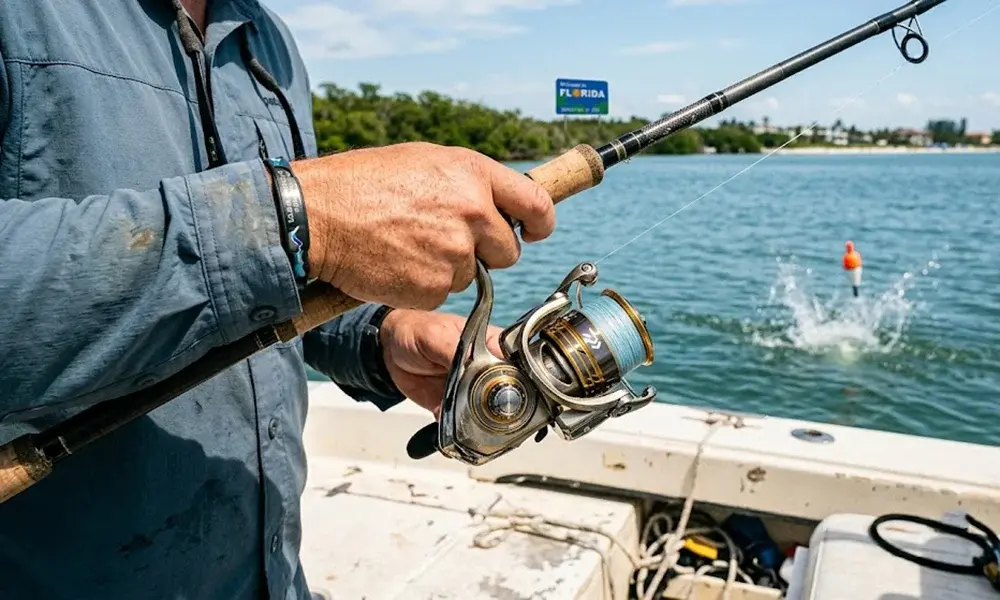
For the vast majority of Cedar Key trips, a medium-light to medium spinning setup covers everything you need: working a popping cork over grass flats, bottom-fishing near oyster bars for sheepshead, casting soft plastics for redfish and trout, or working a topwater plug at first light.
Advantages of spinning tackle:
- Faster learning curve. Most people can cast a spinning rod reasonably well within the first few minutes, even with no prior fishing experience.
- More versatile presentations. Live bait, popping corks, soft plastics, topwater plugs, and bottom rigs are all easy to fish effectively on a spinning setup.
- Better for windy days. Spinning tackle handles wind far more forgivingly than fly gear, which matters given how quickly conditions can change on Florida’s Gulf Coast.
- Ideal for beginners and kids. If you’re introducing someone to fishing for the first time, spinning tackle removes a major barrier to actually catching fish and having fun.
Why Fly Fishing Has Its Devoted Following
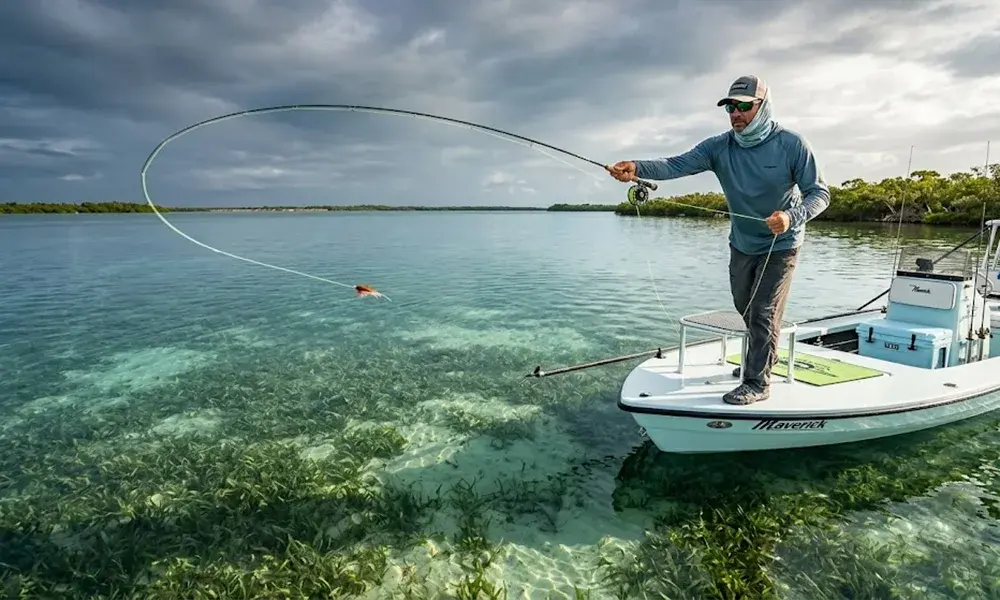
Cedar Key’s shallow, calm flats and generally good water clarity make it a legitimately excellent fly fishing destination; sight-casting to a tailing redfish with a fly rod is considered one of the purest forms of the sport by serious fly anglers.
Advantages of fly fishing:
- Precision presentation. A well-placed fly can land more delicately than a spinning lure, which matters in skinny, calm water where a heavy splash can spook fish.
- The challenge itself. Many fly anglers are drawn to the technical demand of the sport, reading water, making an accurate cast under pressure, and hooking a fish on light gear.
- A different kind of fight. Fighting a redfish on a fly rod, with no reel drag doing the heavy lifting the way it does on spinning gear, is a different (and for some, more rewarding) experience.
The trade-offs:
- Steeper learning curve. Fly casting takes real practice to do well, especially in wind, which is common in Cedar Key, particularly in spring and fall.
- Less forgiving conditions. A fly caster needs calmer wind and clearer water to be effective compared to a spinning angler, who can still produce fish in less ideal conditions.
- Narrower technique range. Fly fishing works best for sight-fishing on the flats; it’s a poor fit for bottom-fishing an oyster bar for sheepshead, for example.
Side-by-Side Comparison
| Spinning Tackle | Fly Fishing | |
| Learning curve | Easy | Steep |
| Best for beginners | Yes | Not usually |
| Handles wind well | Yes | Difficult in wind |
| Works across techniques | Yes (bottom, cork, topwater, sight) | Mostly sight-fishing only |
| Best species fit | All species | Redfish, trout (sight-fishing) |
| Physical demand | Low | Moderate to high (casting) |
What Captain Tracy Recommends for First-Timers
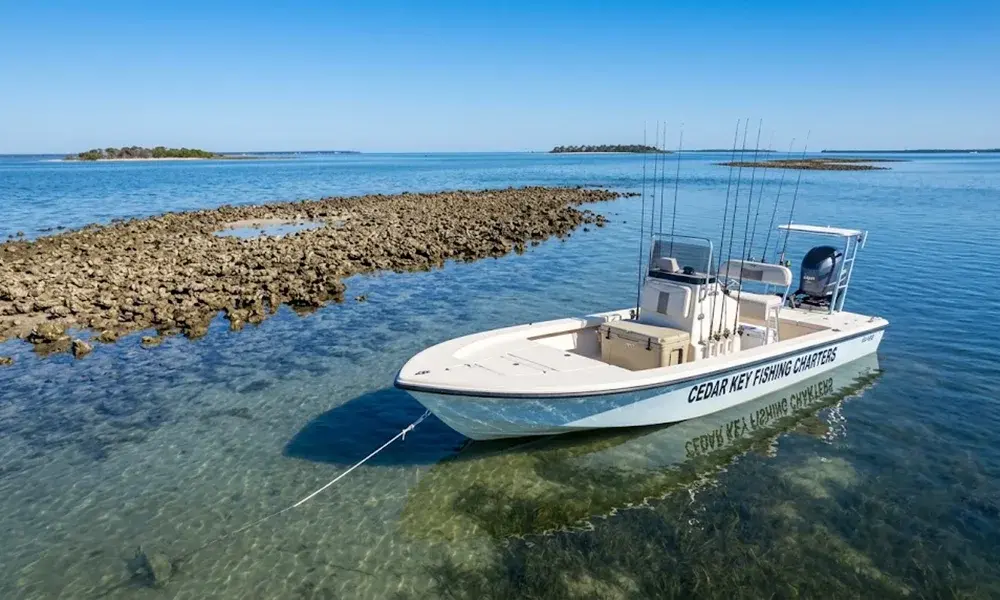
If this is your first trip to Cedar Key, or your first time fishing saltwater at all, spinning tackle is almost always the better choice; it lets you focus on enjoying the day and catching fish rather than fighting an unfamiliar casting motion. Every Saltwater Outlaw charter includes spinning tackle as standard equipment.
If you’re an experienced fly angler and specifically want to fish the flats with a fly rod, it’s worth mentioning this when booking. Sight-fishing conditions (calm wind, good sun angle, clear water) can be planned around to some degree, though Florida’s Gulf Coast weather always has the final say.
A Note on Bringing Your Own Fly Gear
If you have your own fly setup and want to bring it along, that’s absolutely an option; just communicate this ahead of time so the trip can be planned around fly-friendly conditions and techniques as much as possible. A 7 to 9-weight rod with a floating weight-forward line is a solid general setup for Cedar Key’s redfish and trout, similar to what’s recommended for flats fishing elsewhere in Florida.
The Bottom Line
There’s no universally “better” option here; it comes down to your experience level and what kind of day you’re looking for. Spinning tackle is the practical, high-success choice for most anglers, especially beginners and families. Fly fishing is a rewarding, more technical option for those who already love the sport and want to test their skills against Cedar Key’s flats.
Either way, what matters most is fishing water that rewards the effort, and Cedar Key does that regardless of what’s in your hands.
Ready to Book Your Trip?
Whether you’re picking up a spinning rod for the first time or bringing your own fly gear, book a Cedar Key charter and let Captain Tracy tailor the day to your experience level.
Frequently Asked Questions
Is Cedar Key good for fly fishing?
Yes. Cedar Key’s shallow, generally calm grass flats and good water clarity make it a strong destination for sight-casting to redfish and trout with a fly rod.
Should beginners use fly fishing or spinning tackle?
Spinning tackle is strongly recommended for beginners, since it has a much shorter learning curve and works effectively across a wider range of techniques and conditions.
Can I bring my own fly fishing gear on a charter?
Yes, just let the captain know in advance so the trip can be planned with fly-friendly conditions and techniques in mind where possible.
What size fly rod is best for Cedar Key redfish?
A 7 to 9-weight rod with a floating, weight-forward line is a commonly recommended setup for redfish and trout on Florida’s flats.
Does wind affect fly fishing more than spinning tackle?
Yes. Fly casting is significantly more affected by wind than spinning tackle, which can still be fished effectively even in breezier conditions.
Saltwater Outlaw Charters, Cedar Key, FL | Captain Tracy Collins | 352-843-4067
