

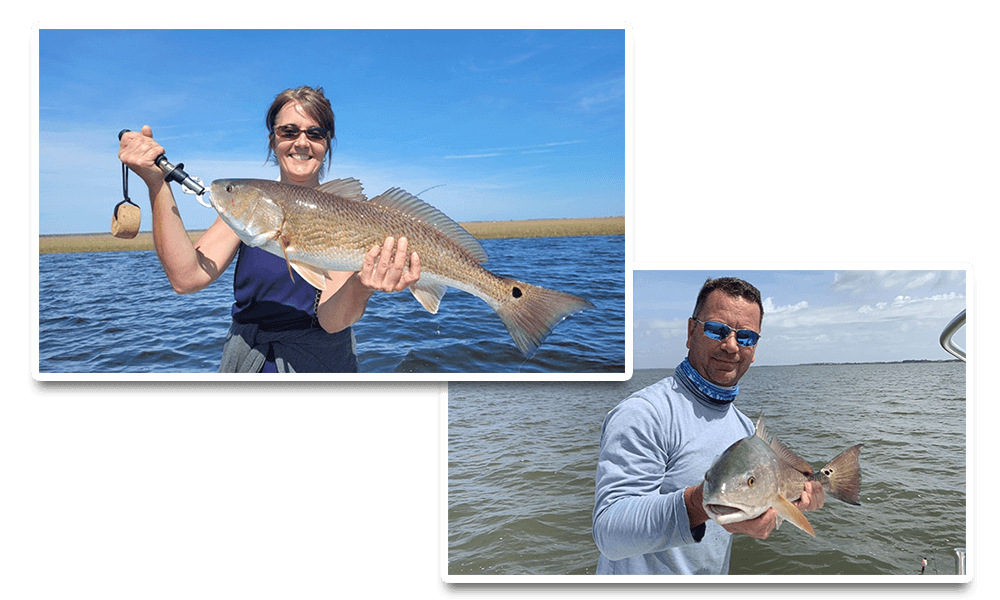
“When should I come fish Cedar Key?” is one of the questions Captain Tracy hears most. The honest answer: there really isn’t a bad month. Cedar Key’s mix of grass flats, oyster bars, and tidal creeks holds fish year-round. But what’s biting, and how, shifts noticeably with the seasons.
This calendar breaks down the Best Time to Fish Cedar Key month by month, so you can plan your trip around the species (or the conditions) you’re most excited about.
Spring (March – May): The Bite Wakes Up
As water temperatures climb out of winter lows, Cedar Key’s flats come alive. Redfish and speckled trout both become more active and aggressive as baitfish return to the shallows, and visibility tends to be excellent, making for some of the best sight-fishing conditions of the year.
- March–April: Redfish fishing starts to heat up as water warms, with fish pushing onto flats to feed. This window also overlaps with peak sheepshead season around structure before the spring spawning run wraps up.
- April–May: Spotted trout move into a strong spawning pattern, often producing some of the most consistent trout action of the entire year. Tripletails also start showing up around markers and floating structures as water warms.
- What to expect: Clear water, comfortable temperatures, and some of the best sight-casting conditions of the year. Spring is a favorite season among repeat Cedar Key anglers for exactly this reason.
Summer (June – August): Variety and Heat
Summer brings warm water, longer days, and a wider mix of species but also Florida’s classic afternoon thunderstorm pattern, so mornings tend to be the most productive (and most comfortable) times to fish.
- June–July: Redfish remain active on the flats, snook activity picks up around mangrove shorelines (though snook harvest is closed June 1–August 31 to protect the summer spawn, catch-and-release only during this window), and sharks become more common as bait schools thicken up nearshore.
- July–August: Spanish mackerel and other fast-moving schooling species become more active around Seahorse Reef and open water, often visible by diving birds working over bait. This is also peak season for offshore-adjacent opportunities for anglers chasing something bigger.
- What to expect: Hot, humid days with a strong morning bite window. Early starts are common in summer to beat both the heat and the afternoon storm pattern; your captain will plan around this.
Fall (September – November): Peak Redfish Season
If there’s one season Cedar Key locals circle on the calendar, it’s fall. Cooling water temperatures trigger some of the most reliable redfish action of the year, and conditions tend to calm down compared to the wind and storms of late summer.
- September–October: Widely considered the best redfish months of the year in Cedar Key. As water cools, redfish school up heavily around oyster bars and creek mouths, making for some of the most consistent action of the season. Among local guides, it’s not uncommon to hear October referred to as “Red October.”
- October–November: Trout fishing picks back up as well, often producing strong numbers alongside the redfish bite. Cooler air also makes for some of the most pleasant days on the water all year.
- What to expect: Calmer water, comfortable weather, and arguably the best overall fishing of the year. If you only have one window to plan a Cedar Key trip around peak redfish action, this is it.
Winter (December – February): Slower Pace, Steady Action
Winter in Cedar Key doesn’t shut fishing down; it just changes where the fish hold and how they behave. Cooler water pushes fish into deeper holes, creek mouths, and areas warmed by sun exposure, and a slower presentation often outproduces a fast one.
- December–January: Sheepshead fishing becomes a strong option around docks, bridge pilings, and oyster bars, since these structure-oriented fish stay active even as flats cool down. Redfish and trout remain catchable but tend to hold in deeper backwaters and creeks rather than open flats.
- February: As water starts to warm back toward spring, the bite gradually picks up, setting the stage for the spring transition. This is also when sheepshead fishing is typically at its best, just ahead of the March–April spawning run.
- What to expect: Cooler, sometimes brisk days, lighter fishing pressure than peak season, and a more deliberate, technical style of fishing focused on structure rather than open flats. Bundle up, but don’t count winter out.
Quick Reference: What’s Biting When
| Season | Top Species | Conditions |
| Spring (Mar–May) | Redfish, Trout, Sheepshead, Tripletail | Clear water, excellent sight-fishing |
| Summer (Jun–Aug) | Redfish, Sharks, Spanish Mackerel (Snook catch-and-release only) | Hot, morning bite, afternoon storms |
| Fall (Sep–Nov) | Redfish (peak season), Trout | Calm, comfortable, most consistent fishing of the year |
| Winter (Dec–Feb) | Sheepshead, Redfish, Trout (deeper water) | Cooler, slower presentation, lighter pressure |
Species availability shifts with weather patterns and water temperature each year; Captain Tracy adjusts trip planning to current conditions rather than the calendar alone.
Why Tides Matter as Much as the Season
In Cedar Key, the season tells you what species to expect, but the tide tells you when and where to actually find them on any given day. Cedar Key’s flats and oyster bars are heavily tide-driven, with many of the best spots only fishable on a rising or falling tide. That’s part of why trip start times are typically confirmed closer to the actual date rather than locked in months ahead; Captain Tracy plans each trip around the tide stage most likely to produce, not just a fixed hour.
If you’d like to look at tide patterns yourself ahead of a trip, NOAA’s Tides and Currents tool provides reliable, publicly available tide predictions for the Gulf Coast, including stations near Cedar Key.
A Note on Weather Planning
Florida’s Gulf Coast weather can move quickly, especially in summer. For the most accurate, up-to-date forecast when planning your trip, the National Weather Service Marine Forecast is the same resource local captains rely on for current conditions and short-term outlooks.
So, When Should You Book?
- Want the best overall odds and most comfortable weather? Aim for fall (September–November).
- Want clear water and great sight-fishing? Spring (March–May) is hard to beat.
- Don’t mind the heat and want a variety of species? Summer (June–August) delivers, especially in the early morning.
- Looking for a quieter trip with fewer crowds and don’t mind dressing warm? Winter (December–February) offers excellent sheepshead fishing and a slower, more technical day on the water.
The truth, though, is that Cedar Key fishes well all twelve months of the year, and a thirty-year local captain who reads the tide and weather better than any calendar will always out-fish a perfect “ideal month” on paper.
Ready to Book Your Trip?
Check availability and book your Cedar Key charter, and Captain Tracy will help you plan around the best conditions for your travel dates.
Frequently Asked Questions
Q: What is the best month to fish Cedar Key, Florida?
A: September and October are widely considered the best months for redfish in Cedar Key, as cooling water triggers heavy schooling activity around oyster bars and creek mouths. Spring (March–May) is also excellent, particularly for sight-fishing in clear water.
Q: Is Cedar Key good for fishing in the summer?
A: Yes. Summer offers strong redfish, shark, and Spanish mackerel action, though mornings are the most productive time of day due to typical afternoon thunderstorms and warmer water temperatures.
Q: Can you fish in Cedar Key in the winter?
A: Yes. Winter fishing in Cedar Key shifts toward structure-oriented species like sheepshead, while redfish and trout move into deeper creeks and backwaters rather than open flats.
Q: What fish are in season right now in Cedar Key?
A: Species availability changes by month and is influenced by water temperature and weather patterns. Check a current Cedar Key fishing report or contact Captain Tracy directly for the most accurate up-to-date information.
Q: Does the tide matter more than the season for fishing in Cedar Key?
A: Both matter, but tide stage often determines success on any given day, while season determines which species are most likely to be active. Experienced local captains plan trips around both factors together.
Saltwater Outlaw Charters, Cedar Key, FL | Captain Tracy Collins | 352-843-4067
