
Most visitors come to Cedar Key for the fishing, the seafood, or the slower pace of life. Few realize they’re walking through one of the oldest and most eventful towns in Florida, a place that’s been a Native American fishing ground, a Seminole War military depot, one of Florida’s largest cities, and a devastated ghost town, long before it ever became the quiet fishing village it is today.
Here’s the real story of how Cedar Key became what it is now.
Ancient Beginnings: Thousands of Years Before Cedar Key Existed
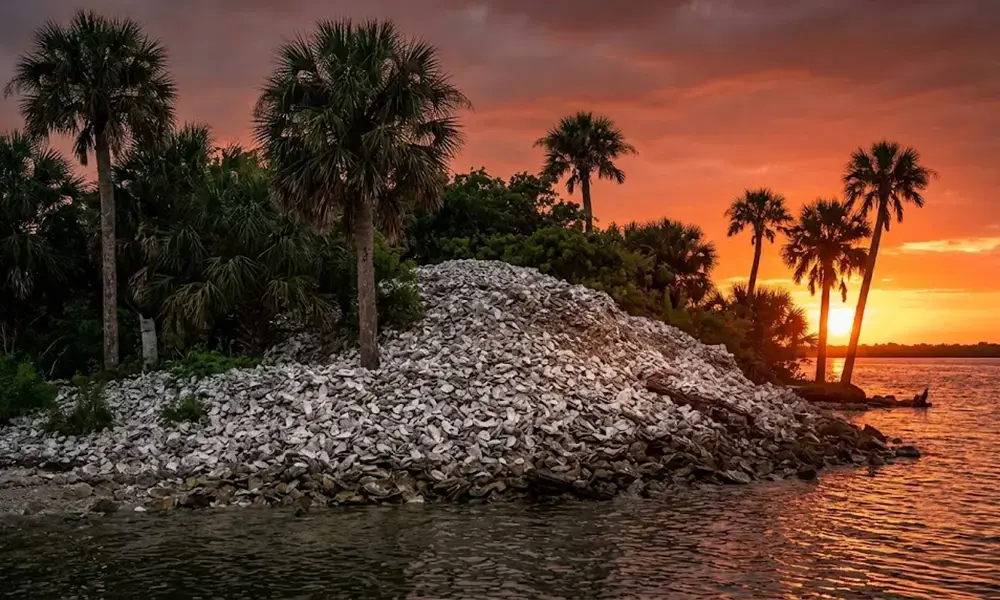
Long before any European set foot in the area, the islands and shell mounds around Cedar Key were used by Native peoples as fishing grounds and settlements. Archaeological evidence, including a Shell Mound dating back to roughly 500 BC, points to human occupation in the area stretching back thousands of years, and a skeleton discovered on Atsena Otie Key in 1999 was determined to be more than 2,000 years old.
Spanish explorers reached Florida’s Gulf Coast in the early 1500s, and by 1542, a Spanish cartographer had labeled the area on a map, an early sign of just how long this stretch of coastline has been documented.
The Seminole Wars and Depot Key
Cedar Key’s more recent, documented history begins with conflict. In 1839, during the Second Seminole War, the U.S. Army established a military post on what was then called Depot Key, including a hospital and staging area used as part of the broader effort to remove Seminole peoples from Florida. A hurricane in 1842 destroyed the encampment, and shortly after, the war was declared over and the Army abandoned the site.
That same year, under the Armed Occupation Act (a precursor to the Homestead Act), settlers were permitted to claim land in the area. Augustus Steele, a customs officer, took over Depot Key and renamed it Atsena Otie Key, a name derived from the Creek word for “cedar island.”
A Railroad Town Is Born
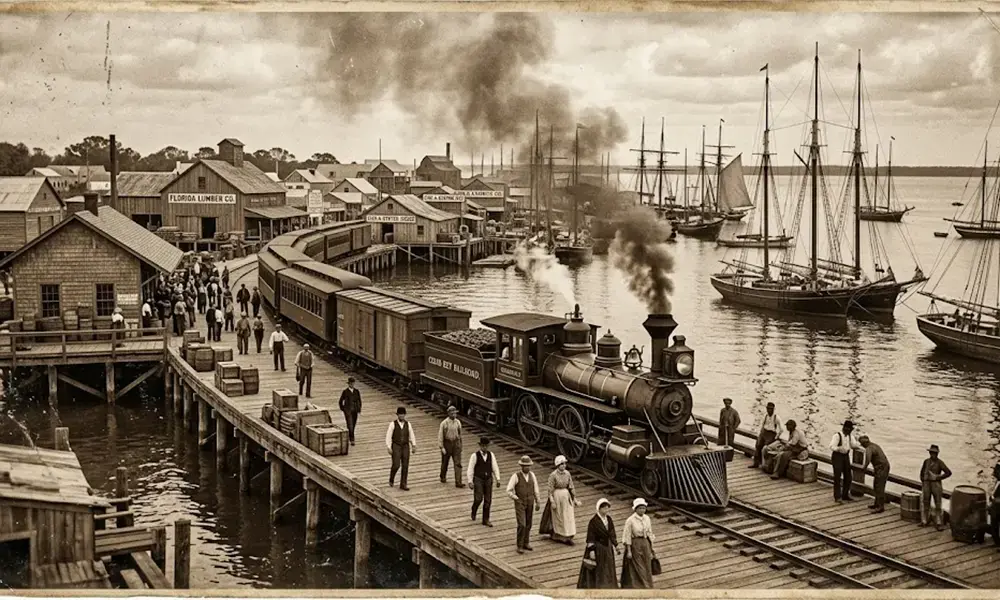
Cedar Key’s transformation into a major port began in the 1850s and 60s. In 1854, the Cedar Key Light Station was completed on Seahorse Key, and by 1860, Cedar Key had become the western terminus of Florida’s first cross-state railroad, the Florida Railroad, connecting the Gulf Coast to Fernandina Beach on the Atlantic side. This made Cedar Key one of the most important shipping ports in the state, moving lumber, cotton, and naval stores across Florida.
By the 1880s, Cedar Key had grown into one of Florida’s largest cities, drawing both commerce and tourists via rail.
The Cedar Mill Era That Gave the Town Its Name
The town’s namesake industry took off in the mid-1850s, when German entrepreneur J. Eberhard Faber, founder of the Faber pencil company, began buying up land in the area specifically for its abundant eastern red cedar trees, prized for their splinter-free wood, ideal for pencil manufacturing. Faber built a slat mill on Atsena Otie Key in 1858, shipping cedar slats to his pencil factory overseas rather than raw logs, which was far more cost-efficient.
By 1876, a competitor, the Eagle Pencil Company, had built its own mill on Way Key (the island where modern Cedar Key sits today), and the pencil industry boomed. At its peak, Cedar Key’s mills were producing cedar slats for hundreds of thousands of pencils annually, and by 1886, the town’s seventeen sawmills were turning out nearly half a million board feet of lumber per week, shipped as far as the West Indies and Mexico.
A Visit From John Muir
In 1867, a young naturalist named John Muir completed a thousand-mile walk from Louisville, Kentucky to Cedar Key, a journey he later chronicled in his memoir, A Thousand-Mile Walk to the Gulf, published after his death. Muir contracted malaria while working in a Cedar Key sawmill and was nursed back to health locally before eventually sailing on to Cuba. His writings capture some of the earliest outside impressions of the area, a naturalist’s eye on a boomtown most people today only know as a quiet fishing village.
The 1896 Hurricane That Changed Everything
Cedar Key’s fortunes turned sharply on September 29, 1896, when a Category 3 hurricane brought a 10-foot storm surge crashing over the town. The storm killed more than 100 people, destroyed the region’s remaining cedar forests, and wrecked the mills that had built the town’s economy. A fire in December of that same year caused further damage to what remained.
By this point, decades of unrestricted logging had already depleted the region’s cedar supply, and a rival railroad built by Henry Plant in 1884 had begun cutting into Cedar Key’s shipping business. The hurricane was less a single blow than the final one, the Faber and Eagle pencil companies both chose not to rebuild, and the town that had briefly been one of Florida’s largest cities was left to reinvent itself almost entirely.
Reinvention: From Timber Town to Fishing Village
With the cedar industry gone, Cedar Key turned to what had always surrounded it: the water. By the early 1900s, fishing, oystering, and sponge diving had become the area’s dominant industries. The oyster beds themselves were eventually depleted by around 1909, pushing the local economy to diversify further into general commercial fishing and seafood harvesting, an identity the town has held onto, and built on, ever since.
Structures that survived the hurricane on Atsena Otie Key were floated across the water to the more protected Way Key, and it’s this island, still known today simply as “Cedar Key”, that became the modern town.
Protecting the Islands: The Wildlife Refuge Era
In 1929, President Herbert Hoover established the Cedar Keys National Wildlife Refuge, setting aside several of the surrounding islands as a protected bird sanctuary, recognizing the ecological value of the very same waters that had once supported the cedar and seafood trades. The old Seahorse Key lighthouse, decommissioned in 1952, was repurposed as a marine research facility for the University of Florida, a role it still serves today.
What Remains Today
Modern visitors can still see traces of this layered history throughout the area. Atsena Otie Key, the original town site, now holds a walking trail past the ruins of the old Faber mill and a small cemetery with headstones dating from before the 1896 hurricane. Downtown Cedar Key itself sits within the Cedar Keys Historic and Archaeological District, recognized on the National Register of Historic Places, and the Cedar Key Historical Society Museum offers a deeper look at the area’s timeline for anyone wanting to dig further into the details.
Why This History Matters for Visitors Today
Understanding Cedar Key’s history changes how the town feels once you’re actually there. The docks you fish from, the waterfront restaurants you eat at, and the quiet, undeveloped character that draws so many visitors today all trace directly back to a town that was built by industry, nearly destroyed by a hurricane, and rebuilt entirely around the water and the fishing that industry had once treated as an afterthought.
It’s a genuinely unusual story for a Florida coastal town, most of the state’s popular destinations were built for tourism from the start. Cedar Key became a fishing and tourist destination almost by necessity, after everything else had failed, which is part of why its character still feels so distinct from the rest of Florida’s coast.
Ready to Experience the History Firsthand?
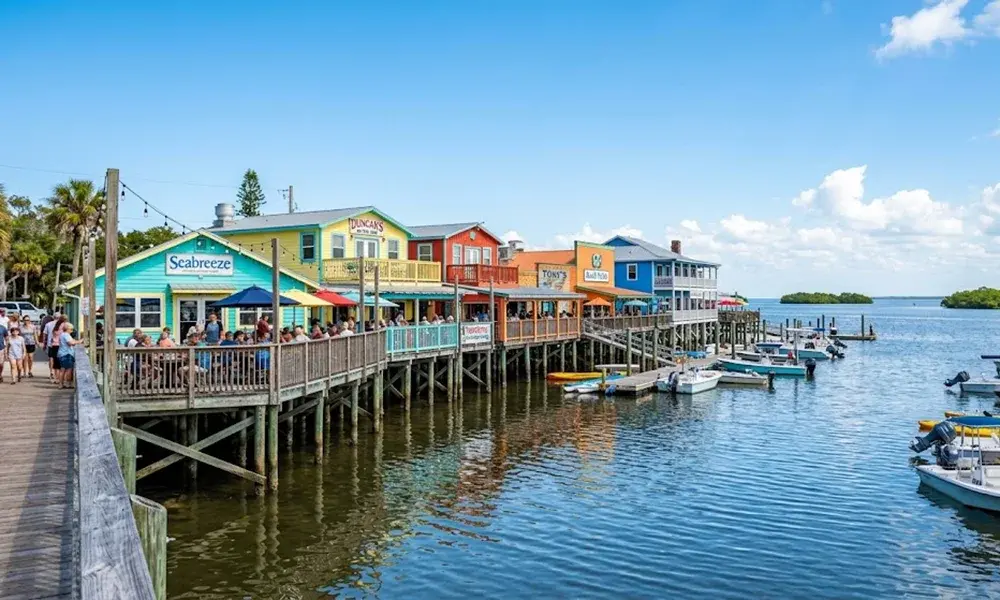
A trip to Cedar Key today means fishing the same waters that sustained the town through more than a century of reinvention. Book a Cedar Key fishing charter and experience the modern chapter of a genuinely old Florida story.
Frequently Asked Questions
How old is Cedar Key, Florida?
Cedar Key has documented history stretching back to the early 1840s as a settled town, with archaeological evidence of Native American use of the area dating back thousands of years. It’s considered one of the oldest towns in Florida.
Why is it called Cedar Key?
The town is named for the eastern red cedar trees that once covered the surrounding islands, which fueled a major pencil-slat milling industry in the mid-to-late 1800s.
What happened to Cedar Key in 1896?
A Category 3 hurricane brought a 10-foot storm surge that killed more than 100 people, destroyed the town’s cedar mills, and effectively ended the pencil-slat industry that had built Cedar Key’s economy.
What was Cedar Key before it was a fishing town?
Before becoming known for fishing, Cedar Key was a major cedar timber and pencil-slat milling town, and briefly one of the largest cities in Florida due to its role as a railroad shipping terminus.
Can you still see historical sites in Cedar Key today?
Yes. Atsena Otie Key features a walking trail past the ruins of the old Faber pencil mill and a historic cemetery, and downtown Cedar Key is part of the Cedar Keys Historic and Archaeological District, listed on the National Register of Historic Places.
Saltwater Outlaw Charters, Cedar Key, FL | Captain Tracy Collins | 352-843-4067
