

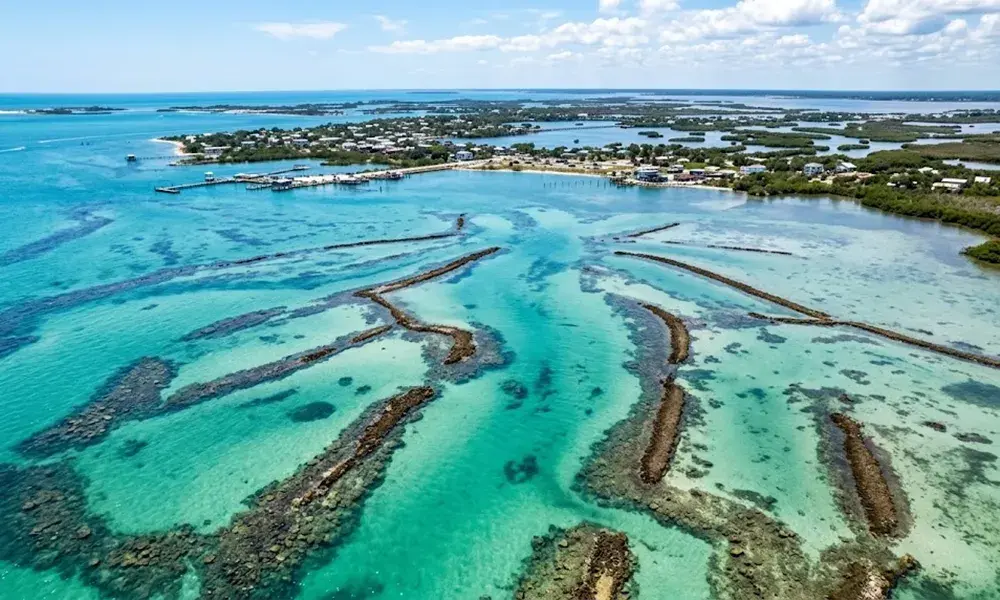
If you’ve ever flown over Cedar Key or looked at a satellite map of the area, you’ve probably noticed something odd: the water isn’t smooth and open. It’s broken up by hundreds of dark, jagged patches scattered across the flats and creek mouths. Those are oyster bars, and they’re arguably the single most important structural feature in Cedar Key’s entire fishery.
Understanding why oyster bars hold fish and how they’re fished is one of the fastest ways to understand what makes Cedar Key fishing different from open-water or beach fishing elsewhere in Florida.
What Exactly Is an Oyster Bar?
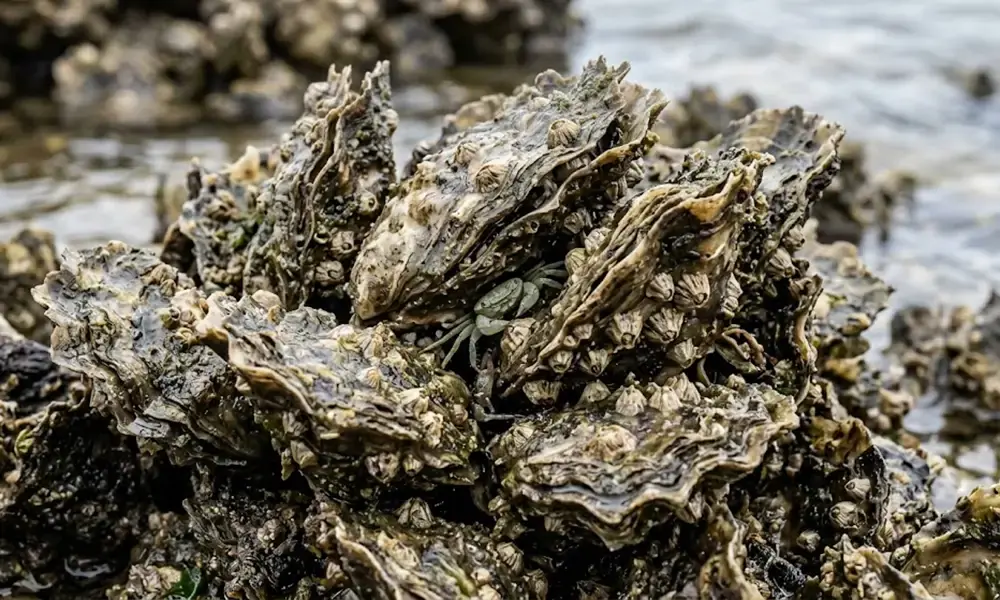
An oyster bar is a natural reef formed by generations of oysters cementing themselves together, built up over time into a hard, ridge-like structure. In Cedar Key, these bars are everywhere, lining creek mouths, breaking up open flats, and forming natural channels and drop-offs throughout the area’s shallow water.
Unlike sand or mud bottom, oyster bars provide hard structure, current breaks, and food all in one place, which is exactly the combination that draws in gamefish.
Why Fish Love Oyster Bars
Food source. Oyster bars are covered in small crabs, shrimp, and baitfish that live in and around the shells, making them a natural feeding ground rather than just a structural feature.
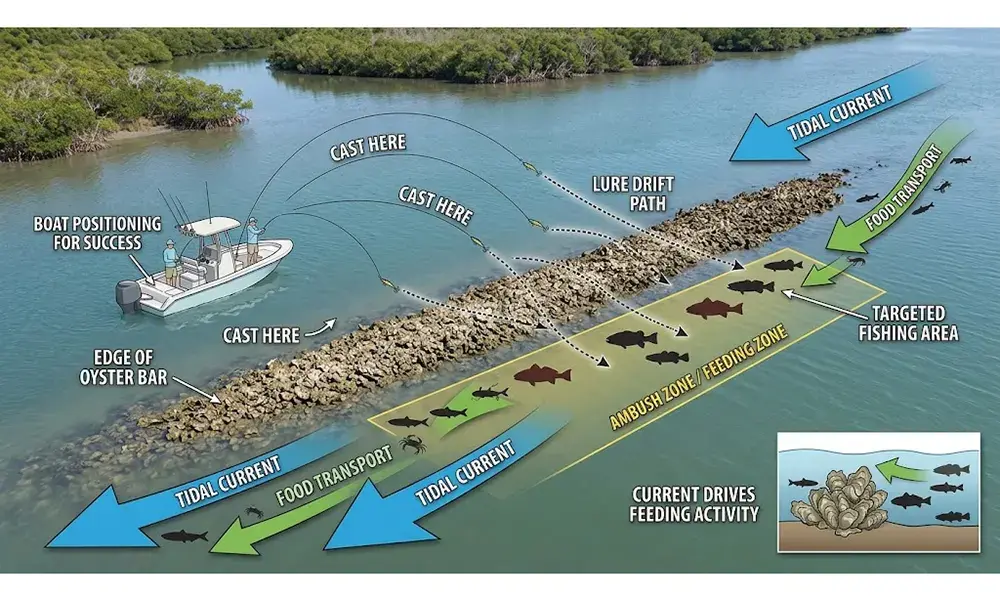
Current breaks. As the tide moves across a flat, oyster bars disrupt and redirect that flow, creating slack-water pockets on the downcurrent side where predators can sit with minimal effort while still ambushing food swept past by the current.
Ambush cover. The irregular, broken structure of an oyster bar gives predatory fish places to hide and wait, rather than being exposed in open water.
Depth variation. Oyster bars often mark the edge between skinny flats and slightly deeper water, and fish frequently stage right along this transition, especially as the tide changes.
How Different Species Use Oyster Bars
Redfish are probably the most closely associated species with oyster bar structure in Cedar Key. They cruise along bars looking for crabs and shrimp and will often push right up against the base of a bar on a rising tide.
Sheepshead are practically synonymous with hard structure; their crushing teeth are built specifically for grinding barnacles and small crustaceans off of oyster shells and pilings, making bars one of their primary habitats.
Black drum favor the deeper edges of oyster bars, particularly where current is strongest, using the same ambush-and-current-break logic as redfish but typically holding slightly deeper.
Sheepshead and black drum especially reward a slow, patient, bottom-focused presentation right against the structure itself rather than a fast-moving retrieve.
How Oyster Bar Fishing Actually Works
Positioning matters more than casting distance. The most productive presentation is often a bait or lure worked slowly along the base of the bar, right where it meets the sandy or muddy bottom, not out in open water away from the structure.
Falling tide is prime time. As covered in our guide to Cedar Key tides, a falling tide drains water off the flats and funnels it past oyster bars, concentrating baitfish and predators together right at these ambush points.
Quiet approach matters. Oyster bars are often in shallow water, and a boat running its engine too close, or an angler making noise on the deck, can spook fish holding tight to the structure.
Watch for the “edge.” The line where an oyster bar drops into deeper water is often the most productive zone of all; it’s where ambush predators sit waiting for the current to sweep bait past them.
A Word on Safety and Etiquette
Oyster shells are sharp, and wading near an active bar (something not typically done on a boat-based charter, but worth knowing) requires proper footwear. On a guided trip, this isn’t something you need to think about; Captain Tracy handles boat positioning to keep you safely working the structure without the risks of wading near sharp shells.
It’s also worth noting that oyster bars are a protected and ecologically important habitat; they filter water, stabilize shorelines, and support the broader food chain that makes Cedar Key’s fishery so productive in the first place. Treating them with care (not running a boat engine directly across an exposed bar, for instance) helps preserve the very structure that makes the fishing here so good.
Why Local Knowledge Is Especially Valuable Here
Not all oyster bars are created equal. Some hold fish reliably on nearly every tide; others are only productive during a narrow window of the tide cycle, or only during certain seasons. Knowing which bars are “money spots” and which are inconsistent takes years of fishing the same stretch of water, exactly the kind of knowledge built up over Captain Tracy’s 30+ years guiding Cedar Key.
Ready to Fish the Structure That Makes Cedar Key Special?
Oyster bars are where a huge amount of Cedar Key’s best inshore action happens. Book a charter and let three decades of local knowledge put you on the bars that are actually holding fish.
Frequently Asked Questions
Why do fish gather around oyster bars?
Oyster bars provide food (crabs, shrimp, and baitfish living among the shells), current breaks that reduce a predator’s energy expenditure, and ambush cover, making them prime real estate for redfish, sheepshead, and black drum.
What’s the best tide to fish an oyster bar?
Falling tide is often considered the most productive, since draining water concentrates bait and predators together as everything funnels off the flats past the bar.
Which fish species are most associated with oyster bars?
Redfish, sheepshead, and black drum are the species most commonly targeted around oyster bar structures in Cedar Key.
Is it safe to fish near oyster bars?
Yes, when fished from a boat, properly positioned by an experienced captain. The main hazard (sharp shells) is primarily a concern for wading, which isn’t part of a typical guided boat charter.
Do all oyster bars in Cedar Key hold fish equally well?
No. Productivity varies significantly by bar, tide stage, and season; identifying consistently productive bars is a skill built from years of local experience.
Saltwater Outlaw Charters, Cedar Key, FL | Captain Tracy Collins | 352-843-4067
