

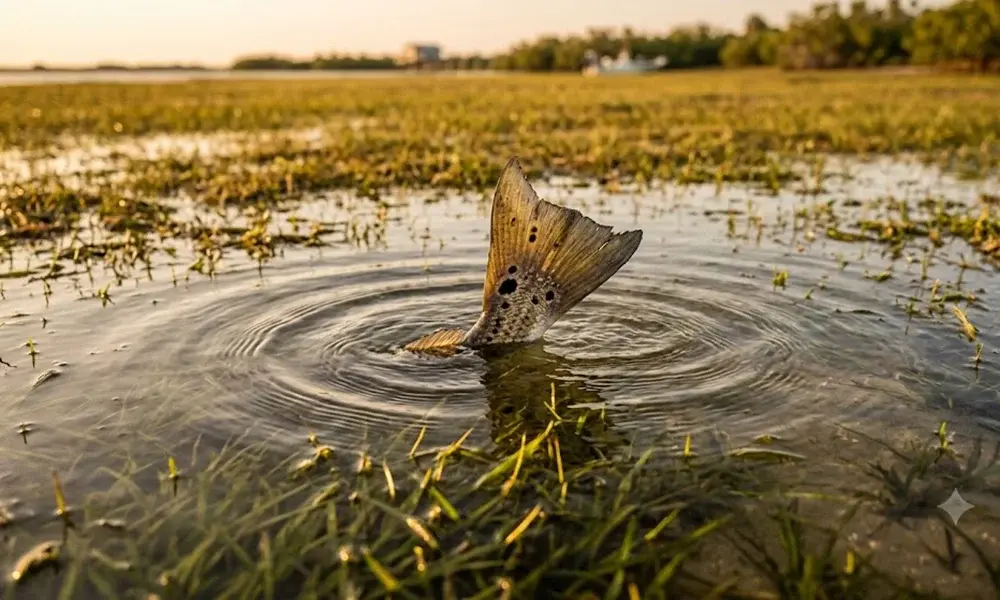
There’s a specific moment every redfish angler chases: the flash of a copper tail breaking the surface of dead-calm water, a shape moving slowly across a grass flat, a subtle push of water where nothing should be moving. That’s sight-fishing, and Cedar Key’s shallow, clear flats make it one of the best places in Florida to experience it.
Unlike blind-casting into deep water and hoping something’s home, sight-fishing means you actually see the fish before you cast to it. It’s part hunting, part fishing, and once you’ve done it successfully, it’s hard to go back to fishing any other way.
What Makes Cedar Key Good for Sight-Fishing
Cedar Key’s grass flats are shallow, often just one to three feet deep, with light-colored sandy or muddy bottom that makes fish stand out against the substrate. Add generally calm, protected water (thanks to the barrier islands offshore) and good water clarity for much of the year, and you’ve got ideal sight-fishing conditions, especially on bright, calm days.
What You’re Actually Looking For
Redfish give off a handful of visual cues on the flats, and learning to recognize them is most of the skill:
Tailing fish. When a redfish noses down into the mud or grass to root out a crab or shrimp, its tail often breaks the surface. This is the classic “tailing red,” a coppery, forked tail sticking up out of shallow water, sometimes waving slightly as the fish digs.
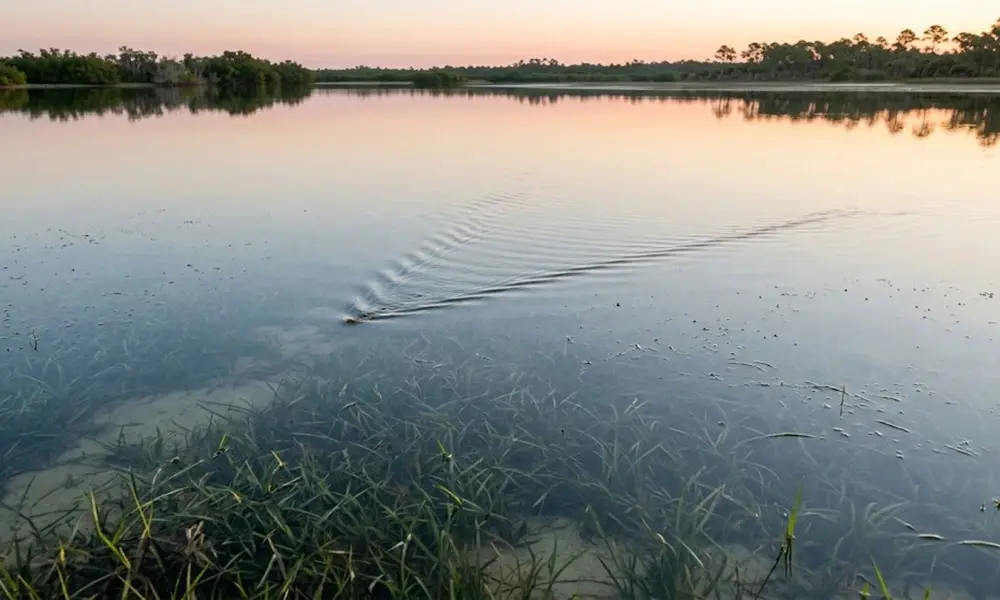
Wakes and pushes. In slightly deeper or murkier water, you might not see the fish itself, but you’ll see a distinct V-shaped wake or a “push” of water as it swims through skinny water.
Nervous water. A patch of water that looks slightly different from what’s around it, a subtle ripple or disturbance, can indicate a school moving beneath the surface, even if you can’t see individual fish.
Actual visible fish. On the clearest days, you’ll spot the fish itself: a shadow or copper-bronze shape gliding over sand or grass.
Why Polarized Sunglasses Are Non-Negotiable
Without polarized lenses, glare off the water’s surface makes it nearly impossible to see beneath it. Polarized sunglasses cut that glare, letting you actually see through the surface to spot fish, structure, and depth changes. This is one piece of gear worth bringing yourself, even though tackle is provided; a good pair of polarized sunglasses can be the difference between a slow day and a great one on a sight-fishing trip.
Best Conditions for Sight-Fishing
Several factors line up to create ideal sight-fishing days:
- High sun angle, Late morning to early afternoon, when the sun is high overhead, cuts down on glare and improves visibility into the water.
- Light wind, Calm water shows subtle wakes and tailing fish far more clearly than a wind-chopped surface.
- Clear water: Water clarity in Cedar Key is generally best in spring and can vary with rainfall and wind, since runoff and stirred-up sediment reduce visibility.
- Rising tide on the flats, As covered in our guide to Cedar Key tides, a rising tide pushes redfish up onto shallow flats to feed, which is exactly when tailing behavior is most common.
How the Approach Works
Sight-fishing is as much about stealth as it is about spotting fish. Redfish on shallow flats are easily spooked by noise, sudden movement, or a boat pushing too much wake. That’s why sight-fishing is typically done by quietly poling or drifting across a flat, scanning the water ahead rather than running the boat’s engine through the middle of a school.
Once a fish is spotted, the cast has to lead the fish appropriately, placing the bait or lure ahead of where the fish is moving, not directly on top of it, which would spook it. This is part of what makes sight-fishing more technical (and more rewarding) than blind-casting: you’re reading the fish’s behavior in real time and adjusting your presentation accordingly.
Common Beginner Mistakes
- Casting directly at the fish instead of leading it, this almost always spooks a shallow-water redfish
- Standing up too abruptly or making sudden movements that alert fish to your presence
- Not adjusting to glare; moving without polarized sunglasses means missing fish that are clearly visible to someone properly equipped
- Overlooking subtle signs, many anglers are trained to look for a fully visible fish and miss the more common signs, like nervous water or a faint wake
Why a Local Guide Makes a Huge Difference Here
Sight-fishing rewards experience in a way that’s hard to shortcut. Knowing which flats hold fish on a given tide, reading subtle water movement from a distance, and making a smooth, accurate cast to a moving target are all skills built over years, not days. On a guided trip, Captain Tracy handles the boat positioning and often spots fish well before a first-time angler would, meaning you get more shots at fish, faster, than you likely would on your own.
What to Bring for a Sight-Fishing Trip
- Polarized sunglasses (this is the one piece of gear that matters most)
- A hat with a dark underbrim to cut glare further
- Light, breathable clothing that allows easy, quiet movement
- Patience, sight-fishing is often a slower, more deliberate style than fast-paced blind-casting, and the payoff is in the takedown, not the volume of casts
Ready to Try It Yourself?
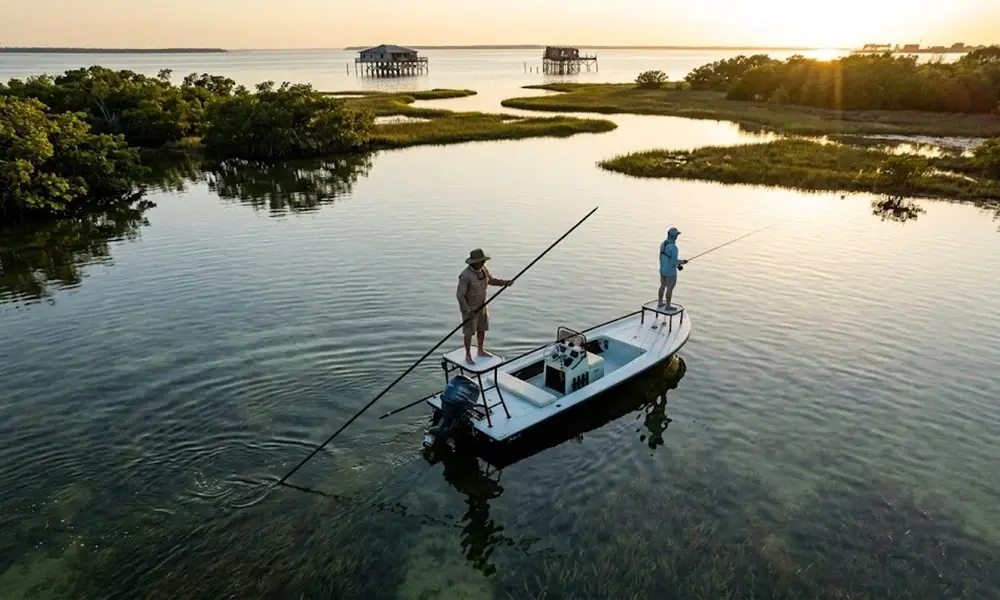
Sight-fishing for redfish on Cedar Key’s flats is one of the most exciting ways to experience inshore fishing in Florida. Book a charter and let Captain Tracy put you on fish you can actually see before you cast.
Frequently Asked Questions
What does “tailing” mean in redfish fishing?
“Tailing” refers to a redfish feeding nose-down in shallow water, causing its tail to break the surface. It’s one of the clearest visual signs used in sight fishing.
Do I need special gear for sight fishing?
Polarized sunglasses are the most important piece of gear for sight fishing, since they cut glare and allow you to see fish and structure beneath the water’s surface.
What time of day is best for sight-fishing redfish?
Late morning to early afternoon, when the sun is high overhead, generally provides the best visibility for sight fishing, assuming calm wind and clear water.
Is sight-fishing harder than regular fishing?
Sight-fishing requires more precision in casting and boat positioning than blind-casting, but it doesn’t require advanced casting skill; a good guide can help beginners succeed at it fairly quickly.
Can beginners do sight-fishing for redfish? Yes. With guidance on spotting fish and making an accurate cast, beginners can absolutely enjoy and succeed at sight-fishing for redfish on a guided charter.
Saltwater Outlaw Charters, Cedar Key, FL | Captain Tracy Collins | 352-843-4067
