

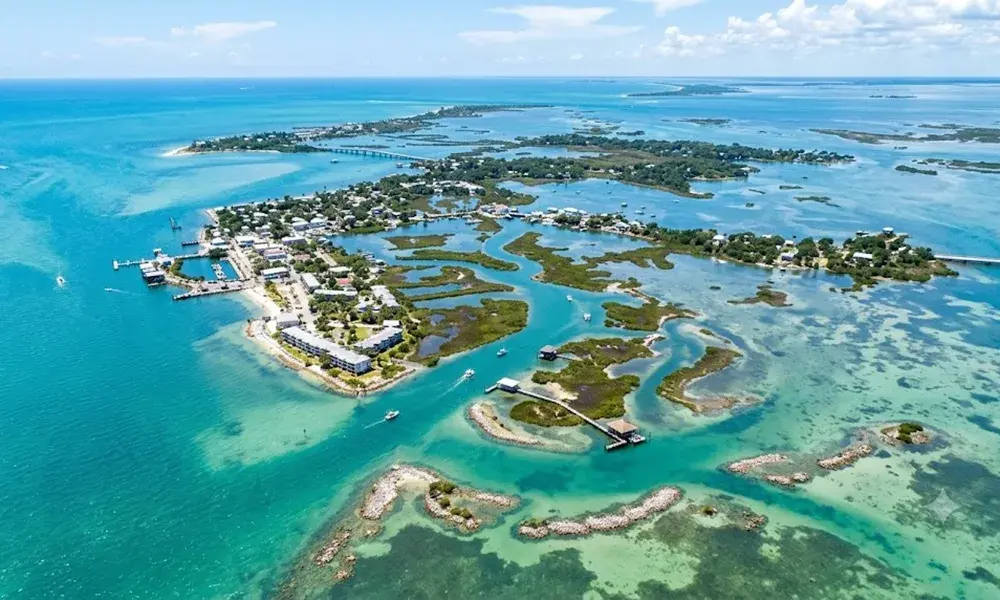
Ask any Cedar Ask a local a simple question, “How’s the fishing been?” and you’ll almost always get the same follow-up question back: “What’s the tide doing?” In most parts of the country, tide is a minor detail. In Cedar Key, it’s the single biggest factor in whether a spot produces fish or sits empty.
This guide breaks down, in plain terms, how tides work around Cedar Key and why understanding them (even a little) changes how you think about a day on the water.
Why Tide Matters So Much More in Cedar Key
Cedar Key sits along Florida’s Big Bend, an area defined by shallow grass flats, oyster bars, and a maze of tidal creeks rather than deep, stable water. Because so much of this terrain is only a few feet deep, or less, the difference between low and high tide isn’t subtle. Flats that hold two feet of water at high tide can be completely dry mud at low tide. Creeks that are easily navigable at high tide can strand a boat at low tide.
That dramatic swing is exactly what makes the fishing so good and so tide-dependent. Fish don’t fight the tide; they use it. Understanding how they use it is the real skill behind consistent catches here.
The Basic Tide Cycle
Most days in Cedar Key see two high tides and two low tides, spaced roughly six hours apart. Between each high and low, water is either rising (incoming) or falling (outgoing).
- Rising tide (incoming): Water pushes up onto the flats, bringing baitfish, shrimp, and crabs with it. Predators like redfish and trout follow the food up onto skinny water.
- Falling tide (outgoing): Water drains off the flats back into creeks and channels, and everything living on the flats, bait and predators alike, gets funneled through narrow cuts and creek mouths.
- Slack tide: The brief period at the very top or bottom of the tide when water isn’t moving much in either direction. Fishing often slows here, since there’s less current to trigger feeding activity.
What Happens on a Rising Tide
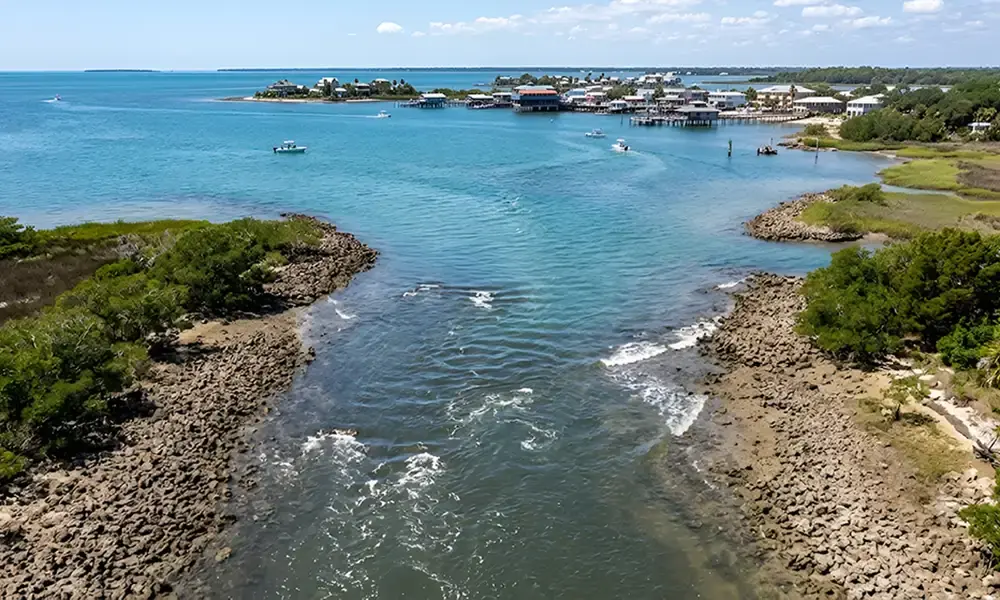
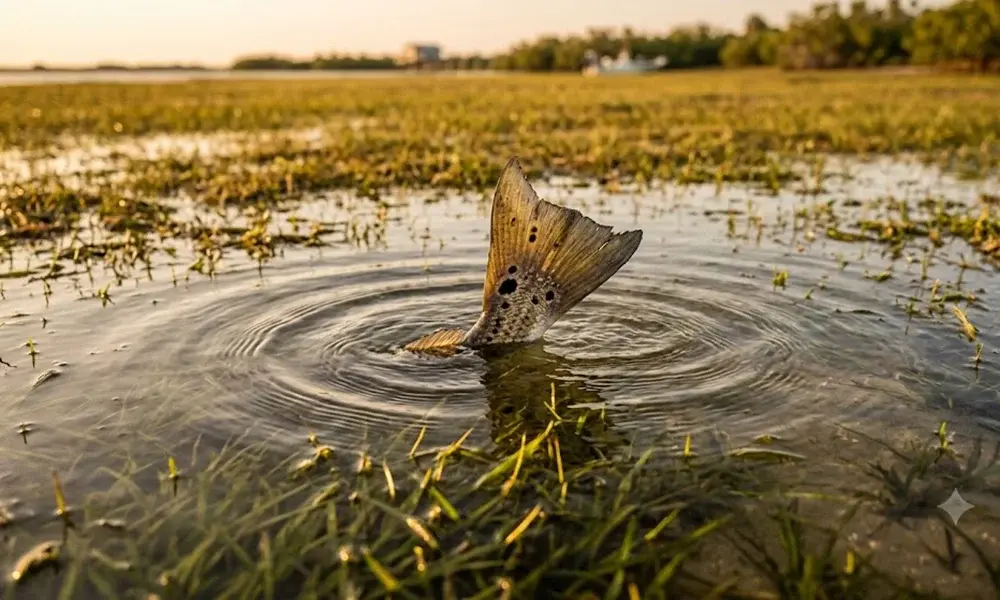
As water rises, it floods over oyster bars and into the shallow interior flats that are inaccessible at low tide. This is when redfish push up into skinny water, sometimes just a few inches deep, chasing crabs and shrimp that get pushed up with the tide. It’s also prime time for the kind of sight-fishing Cedar Key is known for: spotting a redfish’s tail breaking the surface as it noses down to feed (“tailing”).Z
What to target on a rising tide: Shallow flats, the edges of oyster bars as they start to submerge, and the mouths of small tidal creeks where water first begins pushing in.
What Happens on a Falling Tide
As the tide falls, all that water, and everything in it, has to funnel back out through the same creeks, cuts, and channels it came in through. This creates natural ambush points. Redfish, trout, and black drum will often stack up at the mouth of a draining creek or the edge of an oyster bar, letting the current bring food straight to them instead of chasing it down.
What to target on a falling tide: Creek mouths, the deeper side of oyster bars, and any bottleneck where water is visibly draining from a flat into a channel.
Why Slack Tide Can Be the Slow Part of the Day
At the very top or bottom of the tide, water movement slows to almost nothing for a short window. Less current generally means less feeding activity, since fish rely on moving water to bring food to them. This is often when experienced captains will reposition to a new spot, take a break, or switch techniques, rather than fighting a lull.
How This Shapes Your Charter Trip
This is exactly why a Cedar Key charter’s start time isn’t fixed months in advance the way it might be in other destinations. Captain Tracy plans each trip around the tide stage most likely to be productive that day, which means your 6:00 AM trip one week might become an 11:00 AM trip the next, depending entirely on where the tide sits.
It’s also why local knowledge matters so much here. Knowing that a particular oyster bar only holds fish on the last two hours of a falling tide, or that a certain creek mouth lights up right as the tide turns, isn’t something you can learn from a chart; it’s built from years of fishing the same water, tide after tide.
A Simple Way to Think About It
If you’re new to tide-based fishing, here’s the simplest mental model:
- Rising tide = fish moving IN toward the flats to feed
- Falling tide = fish moving OUT, stacking at bottlenecks
- Slack tide = a pause; less action, good time to reposition
You don’t need to become a tide expert to enjoy a day of fishing; that’s what your captain is there for. But understanding the basic logic makes it a lot easier to appreciate why you’re moving from spot to spot throughout the day and what you’re actually looking at when your captain says “we’re fishing the last of the incoming.”
Where to Check Tide Predictions Yourself
If you want to look at tide times ahead of your trip, NOAA’s Tides and Currents tool provides free, publicly available tide predictions for stations along the Gulf Coast, including those near Cedar Key. It won’t tell you exactly where the fish will be; that part still comes down to local knowledge, but it’s a solid way to understand what the water will be doing on any given day.
Ready to Fish the Tide the Right Way?
Reading tides is one of the biggest advantages a local captain brings to your trip. Book a Cedar Key charter and let 30+ years of tide knowledge put you in the right spot at the right time.
Frequently Asked Questions
What is the best tide to fish in Cedar Key?
There isn’t a single “best” tide overall; rising tides are typically best for shallow flat fishing, while falling tides concentrate fish at creek mouths and oyster bar edges. The right tide depends on the specific spot and species being targeted.
How many tides happen in a day in Cedar Key?
Most days see two high tides and two low tides, each about six hours apart, though exact timing shifts daily.
Why do fishing charter start times change with the tide?
Because so much of Cedar Key’s fishing happens on shallow flats and tidal creeks, productivity depends heavily on tide stage rather than the time of day. The captain schedules trips around the tide most likely to produce, which shifts throughout the month.
Do fish stop biting at slack tide?
Not entirely, but activity generally slows during slack tide due to reduced water movement. Many captains use this window to reposition to a new spot rather than continue fishing the same area.
Can I check Cedar Key tides myself before booking a trip?
Yes. NOAA’s Tides and Currents website provides free tide predictions for Gulf Coast stations, which can give you a general sense of tide timing around your travel dates.
Saltwater Outlaw Charters, Cedar Key, FL | Captain Tracy Collins | 352-843-4067
